| The real issue | It’s less about hours on screens and more about how they train your attention. |
| What happens | Feeds, autoplay and notifications reward rapid switching and novelty over deep focus. |
| Signs of overload | Reaching for your phone on autopilot, restlessness, and struggling to read anything long. |
| The fix | Deliberate screen habits, notification hygiene, screen-free breaks and protected deep work. |
If you have noticed that sitting down with a long article or a demanding task feels harder than it used to — that your hand drifts to your phone before you have even decided to check it — you are noticing something real. Screen time affects focus and attention in subtle but powerful ways, not usually by damaging the brain, but by quietly training it. The good news is that what is trained can be re-trained, and a few deliberate habits can hand your concentration back.
This guide explains how everyday device use shapes attention, the signs of digital overload to watch for, and the practical daily changes — plus the studied nutrients — that support a calmer, sharper mind in a world built to distract it.
Screens themselves are neutral tools. The issue is the way modern apps are designed and the way we tend to use them. Three mechanisms do most of the work.
Infinite feeds, autoplay videos and endless scrolling deliver a steady stream of small, novel rewards. Your brain loves novelty — it is wired to notice anything new — so this design keeps you engaged by keeping you switching. The problem is that this is the opposite of deep focus. Spend hours a day rehearsing rapid, shallow attention and it becomes your default mode, so the slow, sustained concentration that reading, writing and problem-solving require starts to feel unnatural and effortful.
Every ping, banner and badge is a small interruption, and interruptions are costly. When your attention is pulled away, part of your mind lingers on the interruption even after you look back — a lingering “switch cost” that means you never quite settle into depth. A phone that buzzes a hundred times a day is a hundred small tugs on your concentration. This is the same mechanism that makes it hard to concentrate on the job, which we cover in our guide to why you can’t focus at work.
The unpredictable rewards of social feeds — a like here, an interesting post there — create a checking habit that is genuinely hard to resist. That is why you can pick up your phone to check the time and surface twenty minutes later. It is not weak willpower; it is a loop engineered to be compelling. Recognising it as design rather than personal failing is the first step to loosening its grip.
How do you know screens are taxing your attention rather than just serving you? Watch for these familiar patterns:
None of these means anything is wrong with you. They are signs of an attention system that is over-stimulated and under-rested — and both of those are fixable.
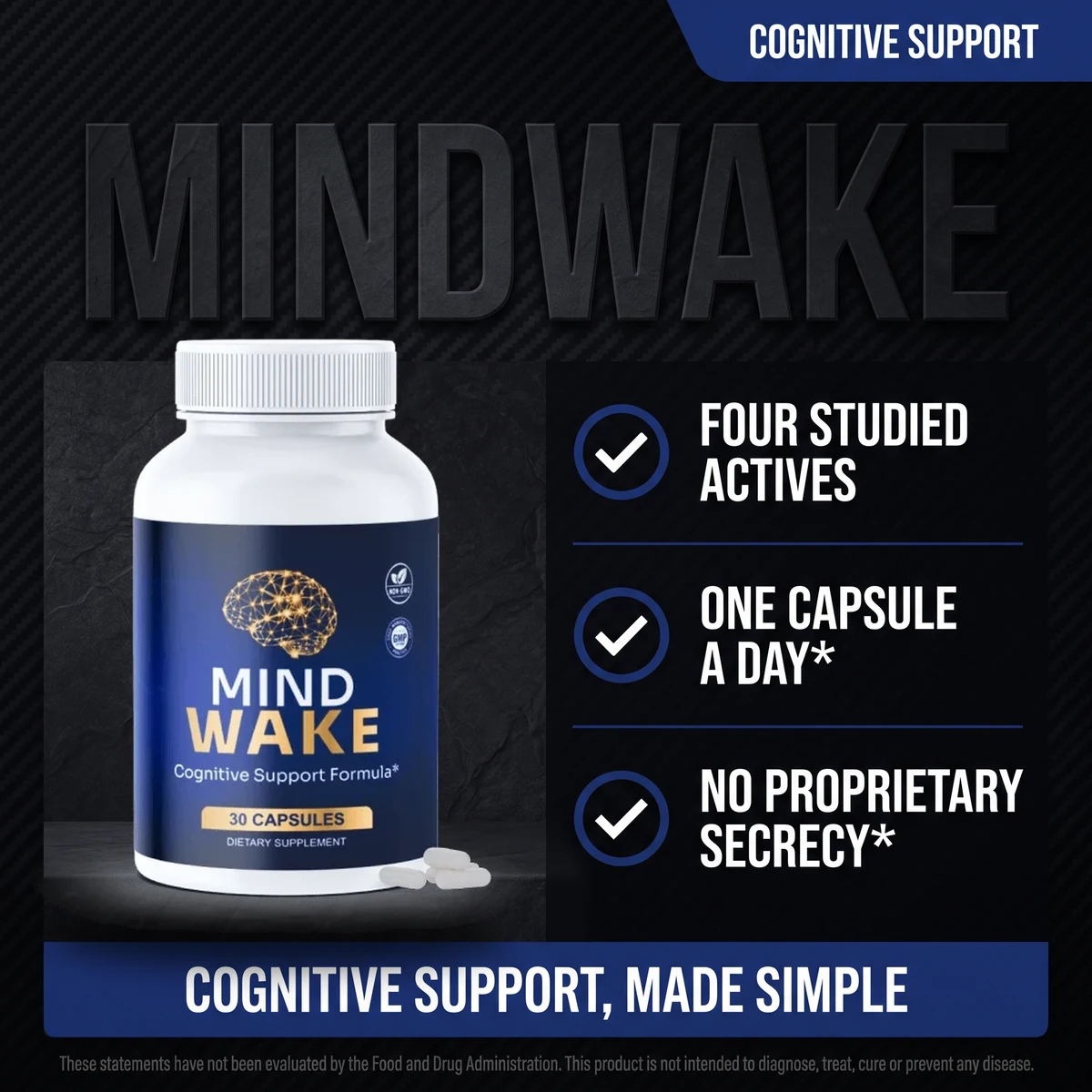
MindWake™ brings six studied nootropic actives together in one stimulant-free daily capsule — an easy way to help supply the nutrients your brain draws on for everyday attention. Backed by a 60-day money-back guarantee.
See MindWake PackagesYou do not need to abandon your devices — just use them more deliberately. Small changes to your environment do most of the heavy lifting, because they reduce the number of decisions your willpower has to make.
For a wider toolkit that goes beyond screens, see our practical guide to improving focus and memory naturally.
Even with good digital habits, the brain benefits from the nutrients it draws on for attention. Here are two studied actives often found in cognitive-support formulas, described by their traditional and general use rather than as treatments for any condition.

A traditional Ayurvedic herb long studied for its role in supporting memory, learning and calm, steady focus — a helpful counterweight to a scattered, over-stimulated day.

A time-honoured botanical traditionally used to support healthy circulation to the brain and everyday mental sharpness.
No supplement will out-run a phone designed to capture your attention — the habits above are what change that. But a well-designed, stimulant-free nootropic can support the brain you are asking to focus, supplying nutrients it draws on so support builds quietly in the background. A once-daily capsule like MindWake keeps things simple: no powder to mix, no stack to remember, just one small anchor to your morning routine. Pair it with deliberate screen habits and you are supporting attention from both directions — how you use your devices, and what you give your brain to work with.

Pair calmer screen habits with one easy daily capsule and let studied actives do the quiet work. Choose a multi-bottle MindWake pack and try it risk-free with a 60-day money-back guarantee.
Order MindWake TodayScreens rarely damage attention directly, but the way we use them trains it in unhelpful ways. Endless feeds, autoplay and constant notifications reward rapid switching and quick hits of novelty, so the brain gets lots of practice at skimming and very little at sustained concentration. Over time that can make deep, single-task focus feel harder to reach — not because your brain is broken, but because it has been rehearsing the opposite habit.
Common signs include reaching for your phone without deciding to, struggling to read anything long without checking a device, feeling restless or anxious when separated from it, difficulty sitting with a single task, disrupted sleep from late-night scrolling, and a general sense of mental noise or fatigue. If several of these feel familiar, your attention may simply be over-stimulated and under-rested.
It often does, in two ways. Bright screens in the evening can nudge your body clock later and make it harder to fall asleep, and engaging content keeps the mind switched on when it should be winding down. Because sleep is when the brain consolidates memory and clears waste, poorer sleep tends to show up as weaker focus and recall the following day.
There is no universal number for adults, because it depends on what the screen time is and whether it crowds out sleep, movement, real-world connection and deep work. A more useful question than “how many hours?” is “is my screen use deliberate, or is it happening to me?” If it is displacing the things that restore your attention, that is the signal to adjust.
Supplements do not counteract poor digital habits, but they can support the brain you are trying to focus with. A stimulant-free nootropic built on studied actives such as Bacopa Monnieri and Ginkgo Biloba is designed to supply nutrients the brain draws on for everyday attention. It works best alongside deliberate screen habits, good sleep, movement and nutrition.
† These statements have not been evaluated by the Food and Drug Administration. This product is not intended to diagnose, treat, cure or prevent any disease. This article is for general information only and is not medical advice. If you are pregnant, nursing, under 18 or taking medication, consult your physician before using any supplement.
 MindWake