| The real cause | Most everyday forgetting is an attention problem, not a memory problem. |
| Why it happens | Distraction, stress, poor sleep and autopilot stop information from encoding. |
| The good news | Fix how information goes in, and recall usually improves on its own. |
| What helps | Full attention, notes and routines, fixed homes for keys, sleep and less stress. |
You walk into a room and forget why. A name vanishes the instant you need it. You put your keys down “somewhere safe” and spend ten minutes hunting for them. If you keep asking yourself why do I keep forgetting things, here is the reassuring headline: for most people, most of the time, this is not a failing memory — it is a wandering attention. And attention is something you can work with. This guide unpacks the everyday causes of forgetfulness, explains why they happen, and lays out simple daily habits that help you remember better.
Understanding the mechanism changes everything, because it moves the problem from “something is wrong with my brain” to “I can change how I take information in.” That is a far more hopeful, and far more fixable, place to start.
To remember something later, your brain first has to encode it — to register it properly in the moment. Only then can it be stored and, later, recalled. The overwhelming majority of everyday forgetting happens right at that first step. You did not lose the memory of where you put your keys; you never really formed it, because your attention was on your phone, your to-do list or the conversation you were having.
This is why “why did I come in here?” is so universal. You walked to the room while thinking about ten other things, so the intention was never encoded strongly enough to survive the journey. The culprit is not your memory — it is that your attention was somewhere else.
Once you know encoding is the weak link, the usual suspects make perfect sense. Nearly all of them are things that split, drain or dull your attention:
Notice how many of these overlap with the causes of that fuzzy, can’t-quite-think feeling. If yours comes with a general haze, our guide to what causes brain fog and how to clear it naturally is a natural companion to this one.

Because forgetting is mostly an encoding problem, the best fixes improve how information goes in — and give you reliable backups for when attention inevitably slips:
When something matters — a name, where you parked, what someone just asked you to do — give it a beat of real, undivided attention. Say it out loud, or pause and look. That single moment of focus is what turns a fleeting input into a memory you can actually recall.
Keys, glasses, wallet, phone: decide on one fixed spot for each, and always return them there. This removes the need to remember at all, sidestepping the weakest link entirely.
Your brain is for having ideas, not storing them. Notes, a calendar with reminders, and a single to-do list mean you no longer rely on recall for appointments and tasks. Writing something down also encodes it more deeply as a bonus.
The more of your day runs on consistent routines, the fewer decisions and details you have to actively remember — freeing up attention for what genuinely needs it.
Linking a new name to an image, repeating it back, or grouping items into chunks all deepen encoding. They feel like effort at first, but they work precisely because they force attention onto the thing you want to keep.
Sleep, hydration, movement, food and stress underpin all of the above. A well-rested, well-fed, calmer brain simply encodes and recalls better — the whole routine is laid out in how to improve focus and memory naturally.
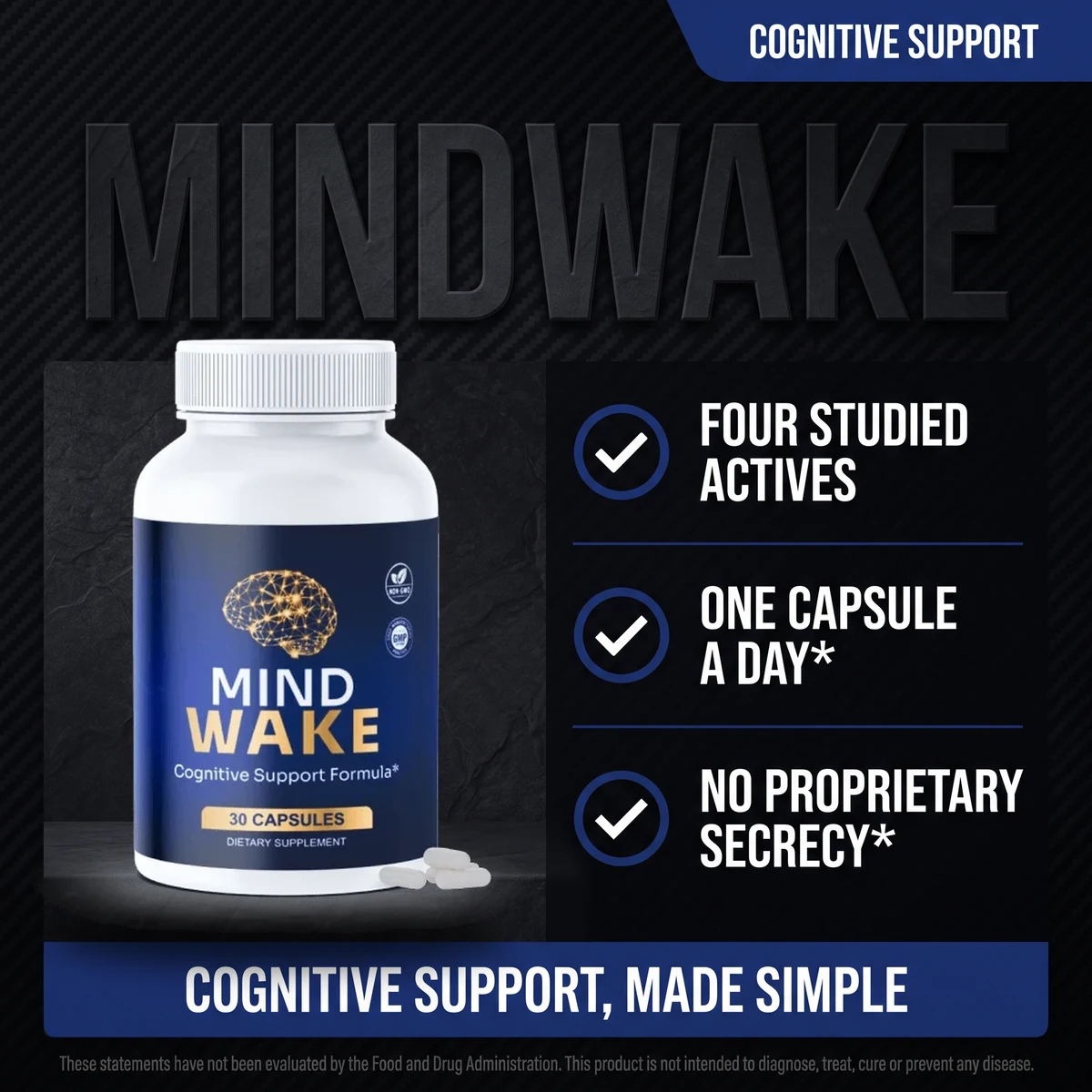
MindWake™ combines six studied nootropic actives — including Bacopa Monnieri and Ginkgo Biloba, both traditionally associated with memory — in one stimulant-free daily capsule. It is designed to sit alongside good attention habits and sleep, supporting everyday recall without jitters or a crash. Backed by a 60-day money-back guarantee.
See MindWake Packages
It is natural to worry that forgetfulness means your memory is declining with age. Some slowing of recall does come with the years, but everyday forgetting happens at every age — students and busy twenty-somethings blank on names and lose their keys just as often as anyone. Far more often the driver is a distracted, stretched, under-slept lifestyle than the calendar. If you would like to understand the genuine age-related picture and how to support it, our guide to why memory changes with age and how to support it covers exactly that.
A nootropic will not pay attention for you — that habit is yours to build. But once you are giving your memory a fairer chance, a stimulant-free formula can offer everyday support, supplying studied actives the brain draws on. Some, like Bacopa Monnieri and Ginkgo Biloba, are traditionally associated with supporting memory and attention. Formulas like MindWake bring together Ginkgo Biloba, Phosphatidylserine, Acetyl-L-Carnitine, Bacopa Monnieri, L-Glutamine and Alpha-GPC in one once-daily capsule. It is everyday support for a busy mind — not a treatment for memory loss or any condition.
Occasional forgetfulness is normal and human. But memory changes that are clearly getting worse, that interfere with everyday life, or that concern you or those close to you deserve a conversation with a healthcare professional — ideally sooner rather than later, since many causes are treatable. Habits and supplements support a healthy memory; they are not a substitute for medical assessment when one is needed.
Pair better attention habits with a few studied nootropic actives in one simple daily capsule. Try MindWake risk-free with a 60-day money-back guarantee.
Order MindWake Today
Most everyday forgetfulness is not a memory problem at all — it is an attention problem. When you are distracted, stressed, tired or rushing, information never gets encoded properly, so there is nothing solid to recall later. Common everyday causes include divided attention, poor sleep, high stress, dehydration and doing things on autopilot. Fixing the input usually fixes the forgetting.
Some slowing of recall with age is normal, but everyday forgetfulness happens at every age and is far more often about attention, sleep and stress than about ageing. Occasionally misplacing keys or blanking on a name is common. Memory changes that are getting noticeably worse or interfering with daily life are worth discussing with a healthcare professional.
Pay full attention when it matters, use external systems like notes and a calendar, build routines and fixed homes for everyday items, get enough sleep, and lower background stress. Because forgetting is usually a failure to encode rather than to store, the biggest wins come from improving how information goes in.
This very common experience happens because the intention was never encoded strongly. You moved between rooms while your attention was elsewhere, so there was no firm memory to hold onto. Retracing your steps often works because returning to the original context can trigger the cue you missed.
A stimulant-free nootropic is everyday support for focus and memory, not a treatment for memory loss. Some studied actives, such as Bacopa Monnieri and Ginkgo Biloba, are traditionally associated with supporting memory and attention. It works best alongside good sleep, stress management and attention habits — not instead of them.
† These statements have not been evaluated by the Food and Drug Administration. This product is not intended to diagnose, treat, cure or prevent any disease. This article is for general information only and is not medical advice. If you are pregnant, nursing, under 18 or taking medication, consult your physician before using any supplement.
 MindWake